
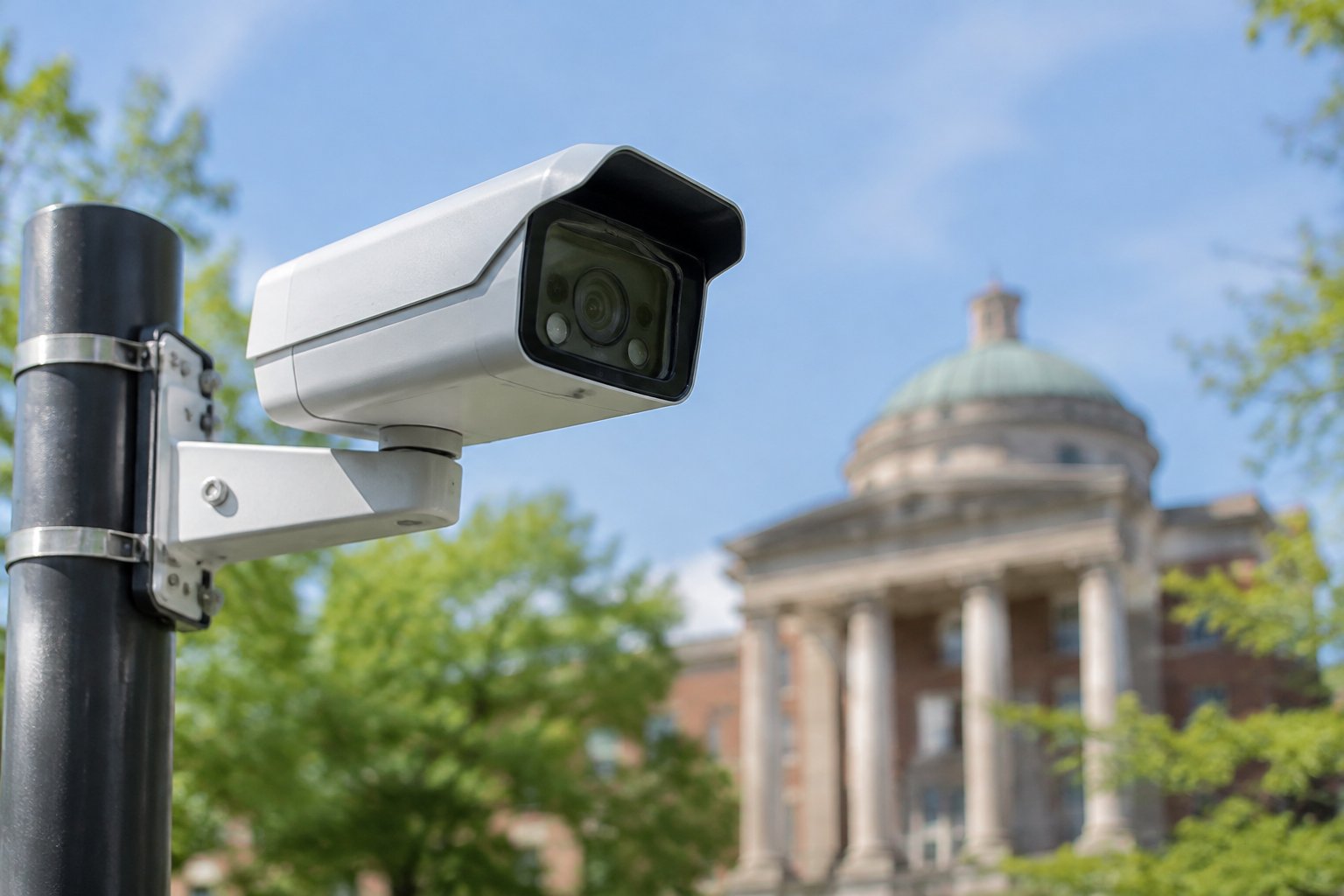
A Flock network audit found that searches by 2,450 agencies across 40 states included cameras at the University of North Carolina at Chapel Hill between late August and late September. The News & Observer obtained the audit through a public records request, and AOL reported on its findings on Nov. 2, 2026. The result does not mean that every search found a vehicle on campus: UNC says a network-wide search records a search of every camera, whether or not a vehicle was identified at a particular location.
What the audit shows
According to The News & Observer’s reporting, the audit recorded more than 206,400 searches that included UNC-Chapel Hill’s Flock cameras during the period. Flock cameras automatically capture license plates of passing vehicles. A search across the network can include the university’s cameras even when the vehicle being searched for was not identified on campus.
Some agencies appeared repeatedly. Houston’s police department ran national license plate searches that included the UNC cameras more than 4,900 times, while the sheriff’s office in Coweta County, Georgia, ran searches that included them nearly 4,300 times. The audit also showed searches by non-police agencies, including the Alabama Department of Revenue and the Ohio Bureau of Workers’ Compensation.
The audit’s public version redacts the plate number, reason for each search, case number and searcher’s name. UNC said the available audit does not show how many searches produced a match on its cameras. The total therefore counts searches that included the cameras, not confirmed sightings of vehicles on campus.
How access works—and what the numbers mean
UNC-Chapel Hill says it does not routinely share Flock information with law enforcement or federal agencies. The university described the network’s function as returning a yes-or-no answer to whether a searched license plate appeared on campus. If the answer is yes, an outside agency must request further information from UNC Police.
That distinction matters: being included in a network-wide search is not the same as an outside agency automatically receiving an image or other identifying details. UNC spokesperson Gabriella Neyman told The News & Observer that a further request would be needed for the image, which can show vehicle details such as make, model and color.
If a license plate was captured on our campus, it will tell them that it was captured.
UNC said it keeps its cameras in the network partly so campus police can be alerted when a searched plate appears on campus. Neyman told The News & Observer that the university wants to know if a potentially dangerous person is on campus and that police consider the alert an additional data point. The university also said it will not regularly audit how often its cameras appear in network searches.
Why this matters to camera users and administrators
For people evaluating surveillance systems, this report illustrates why it is useful to distinguish network participation from the rules for disclosing data. The audit shows that searches included UNC’s cameras, but the public copy does not establish how many searches matched a vehicle on campus or identify the reasons for individual searches.
Those limits matter when interpreting a search count. A high number of searches involving a camera network does not, on its own, tell readers how many vehicles were detected at a particular site, what information was returned, or whether further records were shared. In this case, UNC says a match prompts a separate request for more information, which the university reviews case by case.
The report also shows that searches were not limited to police departments: the audit included state agencies with other roles. For campus communities and system administrators, the practical questions are what a network search returns, what additional information requires a request, and who reviews that request.
Policy background
Before Sept. 9, North Carolina agencies did not have to request further information for a specific vehicle captured by UNC-Chapel Hill’s cameras; identifying information was shared automatically. Police chief Brian James ended that arrangement. UNC said North Carolina agencies now have to request additional information in the same way as agencies from other states.
No North Carolina or federal agencies appeared on the audit. Flock stopped allowing federal users to run national or statewide searches in August 2025. UNC-Chapel Hill said it could not speculate about why North Carolina law enforcement agencies did not run system-wide searches during the audit period.
The UNC System has adopted a regulation covering automatic license plate readers, or ALPRs. It says ALPR data is confidential and may be disclosed only as authorized by law. Requests from law-enforcement agencies outside North Carolina, including federal agencies operating in different states, must be documented and reviewed by an ALPR administrator or designee; they must also be time-limited and approved by a campus official who reports directly to the chancellor.
What to watch next
UNC-Chapel Hill said it is reviewing the new regulation to ensure its practices comply. The university has until Jan. 1 to do so. That review is the next stated checkpoint for how the campus handles requests for ALPR information.
For readers following the issue, the key distinction to keep in view is whether a reported figure counts network searches that included a camera or confirmed matches at that location. In this case, UNC says the released audit cannot show how many searches returned a hit on its cameras, and the university says it will not conduct regular audits of how often its cameras appear in searches.
Source: aol.com