
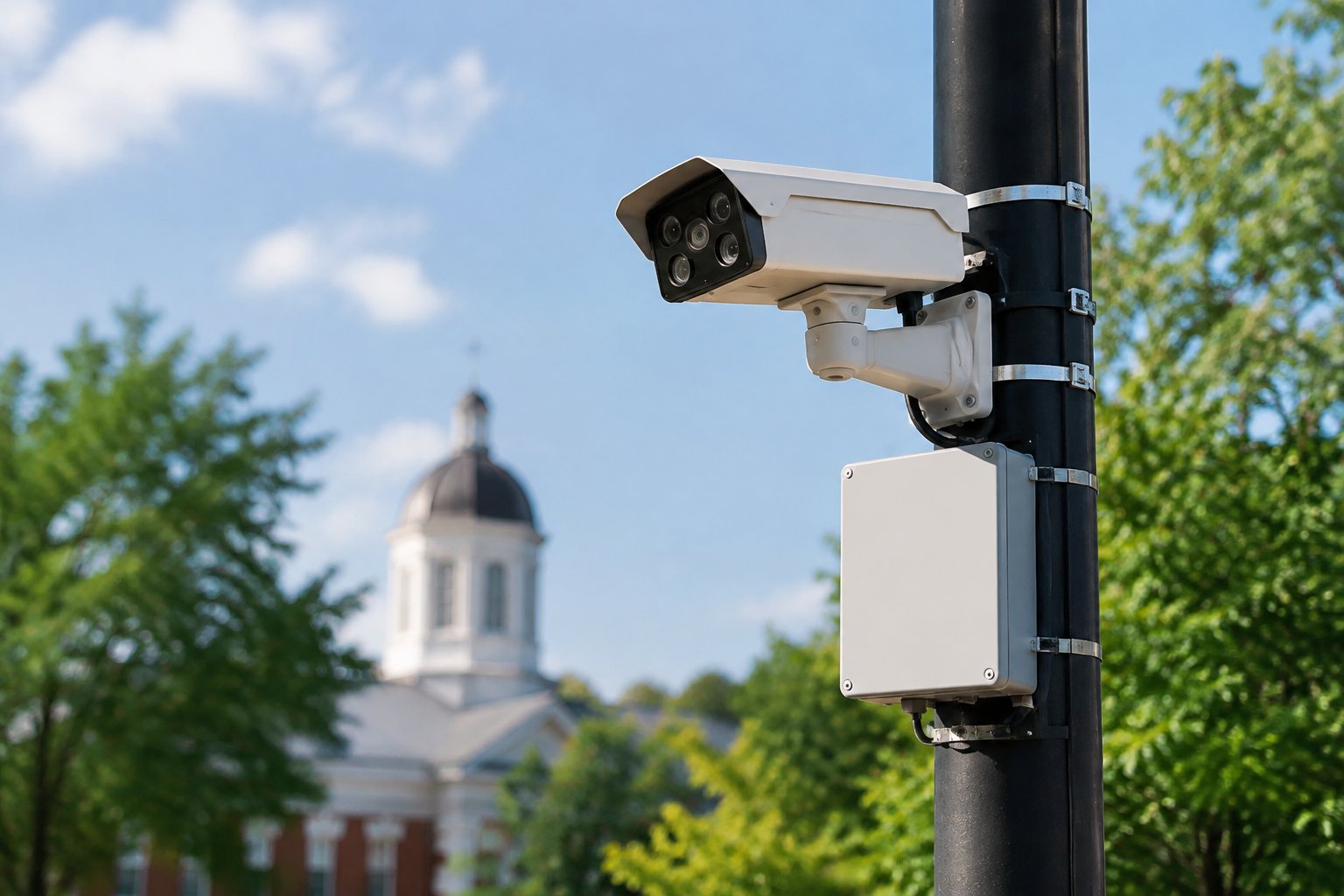
At least 10 local governments and police departments in the United States have moved since summer to restrict or end their use of Flock Safety technology, according to TechCrunch’s Nov. 5 report. The decisions span communities in several states and include contract cancellations, planned shutdowns and a resident vote against continued use of license plate readers.
What communities have decided
TechCrunch reported that, over the preceding three months, Monroe, Ohio; Newburgh, New York; Richmond, Virginia; Hopkinton and New Bedford, Massachusetts; and Lansing, Michigan, moved to end their agreements with Flock. Police in East Bridgewater and Grafton, Massachusetts, separately announced plans to stop using the cameras.
In League City, Texas, residents voted this week against continued police use of Flock license plate readers, and the cameras are set to be removed. Asheville, North Carolina, police lost access after the city voted in August to terminate its contract. The El Paso County Sheriff’s Office in Colorado announced in September that it would stop using the cameras. In October, South Windsor, Connecticut, voted to remove cameras that local reports said had gone live the previous year without public warning or a vote.
The actions vary: some are decisions to end contracts, some are plans announced by police, and others involve votes or changes to access. SiliconReport also reported on the League City vote and described it as requiring the town to remove the hardware. The reports identify objections involving privacy, data sharing and procurement.
Why data access and oversight are central
One concern is who can search license plate-reader data and under what authority. In March, Ithaca, New York, passed a resolution to end its contract with Flock Group. As quoted by TechCrunch, the resolution cited “proven instances of Flock Safety infrastructure being used by federal agents for information purposes even without specific authorizations from the contracting locality.” It also referred to reports concerning access by U.S. Immigration and Customs Enforcement and the Bureau of Alcohol, Tobacco, Firearms and Explosives.
SiliconReport said reporting by 404 Media found that Customs and Border Protection regularly searched more than 80,000 Flock cameras nationwide. SiliconReport reported that Flock said it had paused all federal pilot programs in response. Separately, Flock told TechCrunch it had no contract with ICE and that customers own their data and control how it is shared and used.
Misuse by individual officers is another part of the debate. TechCrunch reported that a Brentwood, Missouri, officer was accused in August of using Flock cameras to stalk his former wife during their divorce. In September, an East Texas officer was sentenced to prison for using the technology to stalk his former girlfriend and her family. These reported cases concern alleged or proven misuse, rather than a finding about every deployment.
Adam Schwartz of the Electronic Frontier Foundation told TechCrunch that residents may not know when cameras are installed and that police departments can decide to use the technology with little city council oversight. He described local purchasing decisions as an avenue for residents and councils to influence deployments.
These tools can offer real public safety benefits, but communities are clearly interested in ensuring that those benefits are not at the cost of their civil liberties
Benefits, restrictions and company responses
Flock sells license plate readers, drones and microphone-based devices that use edge computing to detect gunshots and other sounds, according to TechCrunch. The company says its technology helps police investigate serious crimes, locate suspects and find missing people. TechCrunch reported that more than 100,000 Flock cameras are in use across the United States.
Flock told TechCrunch that removing the tools “moves public safety backward,” while saying customers own their data, control sharing and use, and that the company does not sell data. The disagreement is therefore not only about whether a system can support investigations, but also about who can access its data, what searches are permitted and how communities authorize its use.
Not every community has ended its arrangement. Cleveland, Ohio, voted this summer to extend its Flock contract, while restricting searches related to immigration and limiting database access to Cleveland Police. The change cut off access for the Northeast Ohio Regional Fusion Center. The city said the technology is used for investigations and that its Department of Public Safety was reviewing proposals from other vendors offering similar products.
Flock said in August that it would reduce the default data-retention period for new customers from 30 days to seven and require agencies to enter a case code before searching the database. Those announced changes are relevant to system operators reviewing retention and search controls, but they do not settle the separate questions of local approval, permitted data sharing or oversight.
State and national context
The local decisions come alongside state-level action. TechCrunch and Mezha reported that Florida barred license plate readers from state highways over the summer, while Texas paused state funding for Flock. These measures have different scopes from local contract decisions; the reports do not describe them as a nationwide ban.
The debate has also reached federal politics. TechCrunch reported that Representative Thomas Massie introduced the Flock-Off Act in September, proposing to bar federal money from buying Flock-style surveillance and to establish other safeguards. In October, Senator Bernie Sanders, Representative Alexandria Ocasio-Cortez and Senator Jeff Merkley introduced the Ban Flock Act, which they described as an effort to halt the expansion of AI-powered surveillance cameras. The reports describe bills being introduced, not a final federal decision.
Mezha also reported that President Donald Trump said in September that he liked Flock’s technology “because of law enforcement,” and that a Reuters poll that month found more Americans disliked the technology than liked it. The pushback is part of broader public debate about the rapid adoption of AI, including facial recognition and data center construction, as described by TechCrunch.
What camera operators and residents should check next
For homeowners, small businesses, integrators and administrators, the immediate implication is that a camera deployment’s status and rules may depend on local decisions. A vote to end a contract, a police department’s announced plan to stop using cameras and a restriction on searches are distinct outcomes; none should be treated as a blanket change to every Flock system.
If a local deployment affects your work or community, check the relevant city or county council records and police department announcements for the contract’s status, any removal decision, database access rules and the stated retention period. Where a change has been announced, confirm whether it has taken effect and which systems or agencies it covers before relying on continued access or assuming data-sharing practices have changed.
Further developments to watch include local implementation of announced cancellations and removals, Cleveland’s review of proposals from other vendors, and the progress of the two federal bills. The reports provide no final outcome for those pending or announced matters.
Source: techcrunch.com