
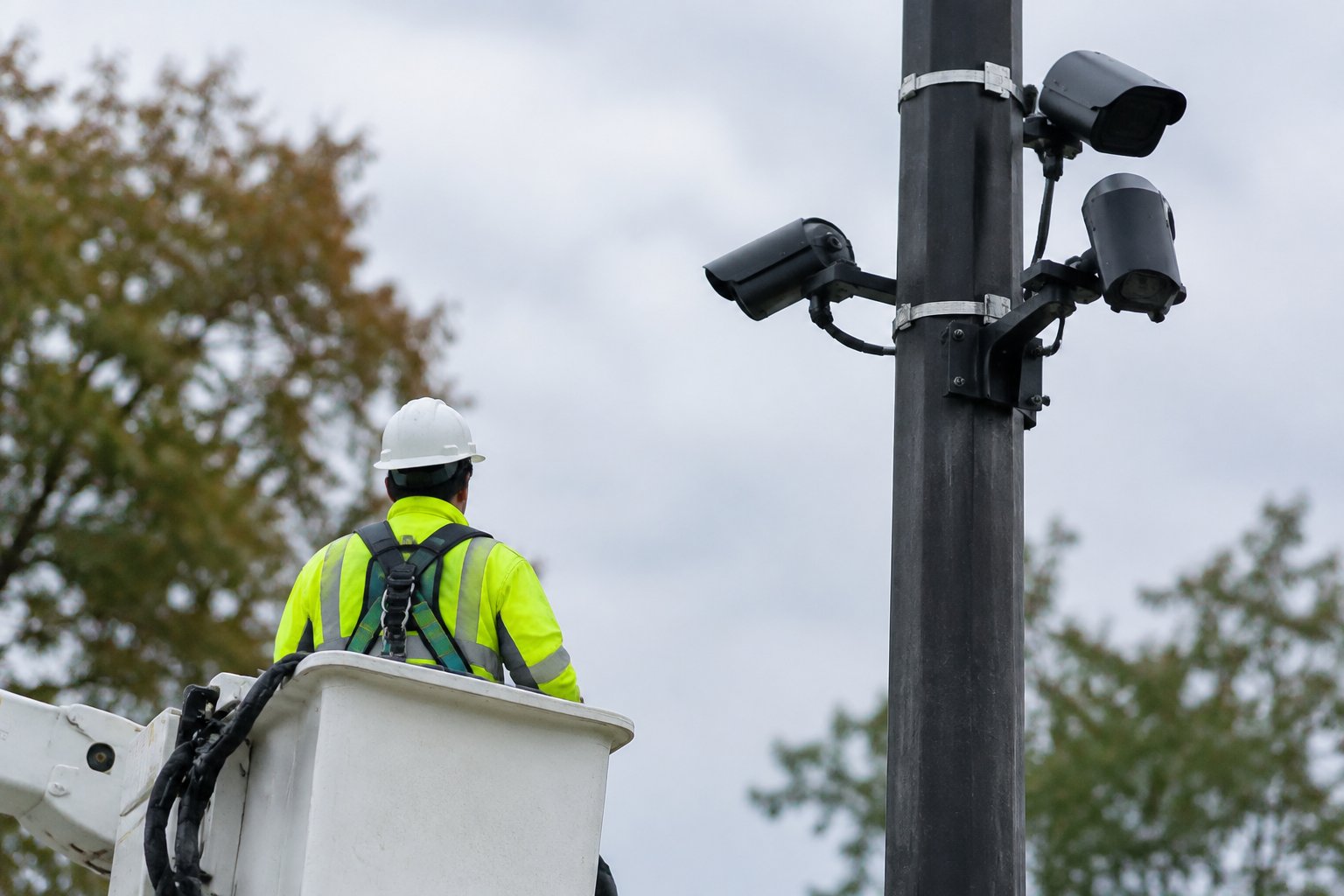
Henrico County crews dismantled more than 120 Flock Safety automatic license plate reader cameras on Saturday, Oct. 31, after the company missed a deadline to remove them from Henrico County, Virginia. WTVR reported on Nov. 2 that the cameras had already been deactivated and were no longer collecting data, according to the county; the hardware will remain in storage until Flock retrieves it.
What happened
More than 100 Henrico Public Works employees worked across the county on Oct. 31 to take down the cameras, according to the county’s account in WTVR’s report. Crews began at opposite ends of the county and worked toward the middle. The camera equipment is being stored while the county waits for Flock to retrieve it.
The camera-supporting poles were left in place. WTVR reported that Henrico says Flock is responsible for removing the poles and covering the county’s costs associated with removing the equipment. The report does not give a date for when Flock will collect the stored cameras or remove the poles.
The county had notified Flock on Oct. 7 that it was terminating the contract effective Oct. 14. Henrico also instructed the company to stop collecting data through the automatic license plate readers by Oct. 14 and set Oct. 21 as the deadline for removing the cameras. After the deadline passed without their removal, the county sent its own crews to dismantle them.
Flock said in a statement quoted by WTVR that, when the contract ended, its cameras stopped capturing new license plate data and the company contacted the police department to explain its removal process and timeline. The company said its standard terms call for removal within a “commercially reasonable time period” and that it would have followed those terms if the county had not removed the cameras itself. Flock also said it had contacted county officials again to coordinate further removal efforts.
Why it matters to residents and video-system operators
The removal separates two issues that matter in camera-system shutdowns: whether a system is still collecting information and whether its equipment remains physically installed. Henrico said the cameras were deactivated and no longer collecting data, but their continued presence had still concerned some residents. The county said it understood those concerns even though data collection had stopped.
For people who choose, operate or oversee video systems, the episode highlights the practical steps that can follow a contract termination: stopping data collection, taking equipment down, storing it, and coordinating its retrieval and any remaining site work. The report describes Henrico’s handling of this contract; it does not establish a general rule for other jurisdictions or agreements. Operators should check the terms of their own contracts and confirm the status of equipment and data handling with the responsible parties.
The cameras had been used by Henrico police to help investigate crimes by identifying vehicles. Their removal therefore also affects a tool the department had used for police investigations. The county had said it would evaluate other technology options to support police operations, but the status of any replacement remained unclear in the latest information reported by WTVR.
Background: the county’s decision
Henrico announced on Oct. 6 that it planned to end its relationship with Flock amid concerns about data collection, data access and privacy. Board of Supervisors Chairman Roscoe Cooper said at the time: “We believe the time is now.” County officials said the decision followed conversations with community members, police, experts and board members.
Residents had raised concerns while the equipment remained in place after the system was shut down. On Oct. 29, the Henrico Citizen’s Liana Hardy reported that all 128 cameras were still installed, more than three weeks after Henrico first announced plans to end its relationship with Flock. County Attorney Andrew Newby told the Henrico Citizen that the devices were no longer operational: “They're deactivated. They're not connected to anything. It's not connected to our system or any system.”
Supervisor Misty Roundtree had said the county was prepared to use Public Works employees if Flock did not remove the equipment, although she described that as not the preferred approach. Henrico officials said they believed the police department had used the data responsibly, while remaining concerned about the potential for misuse. WTVR also reported that the county’s decision followed an unrelated case in Chesterfield County in which a police department employee was arrested for allegedly misusing that county’s license plate reader system.
Views on the cameras’ investigative value differed. Miles Turner, a retired Central Virginia law enforcement officer who had used Flock cameras while working in Caroline County, told WTVR that they could provide real-time information about stolen or wanted vehicles and help investigators working on robberies, homicides and sexual assaults. He also acknowledged privacy and misuse concerns, saying safeguards had to be tight enough to prevent misuse. Turner said of Henrico’s decision to stop using the cameras, “In the long run, it's going to hurt more than it's going to help.”
What to watch next
The next steps reported are Flock’s retrieval of the stored camera equipment and removal of the remaining poles. The county has said Flock is responsible for that pole removal and the associated costs, while Flock says it is continuing to coordinate with county officials. The report gives no completion date for either task.
Henrico had previously said it would evaluate other technology to support police work. On Oct. 29, Newby told the Henrico Citizen he was not aware at that time of an ongoing effort to purchase a replacement automatic license plate reader system. Anyone following the county’s plans should look for subsequent announcements from Henrico about equipment removal or any decision on replacement technology.
Source: wtvr.com